
What is Peyronie’s Disease?
- Kenneth jackson DeLay
- Apr 17, 2023
- 4 min read

Updated: Jun 26, 2023
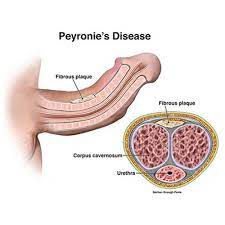
Peyronie’s disease is a condition in which the penis forms scar tissue, called a plaque, which can result in a bent (curved) or indented penis. The scar tissue makes the penis inelastic or less able to stretch. This makes the penis less likely to stretch and can lead to indentation or what is called an hourglass deformity.
Causes of Peyronie’s Disease
Although a clear cause has not been described, most researchers believe that the disease is caused by repeated injury to the penis due to trauma or aggressive sex. However, most commonly, no specific trauma to the penis is recalled. After the penis has a microscopic (not visible to the eye) injury, the body will send cells to “repair” the injury. On certain occasions, those cells cause inflammation and fibrous scar instead of healthy elastic tissue.
The penis contains two sponge-like tubes called the corpus cavernosum. These are the tubes that fill-up with blood and give rise to an erection. Each corpora cavernosum is surrounded by a sheath or covering of elastic tissue called the tunica albuginea.
In Peyronie’s disease, the tunica albuginea forms scar tissue that does not stretch, and when the corpora fills up with blood during an erection, the penis bends or becomes disfigured.
How Common is it and Who is at Risk?
Research shows a prevalence close to 8%. 1,2 That is, 1 in every 11 men suffer from the condition. Men with diabetes, history of trauma to the penis, low testosterone, and those with history of radical prostatectomy for prostate cancer are at risk of developing Peyronie’s disease.
Common Symptoms of Peyronie’s Disease
Symptoms of Peyronie’s disease include:
Bend or curve in the penis
Hardness or lump in the penis.
Narrowing or shortening in the shaft of the penis.
Painful erection, or pain during sexual intercourse.
Erectile dysfunction
Diagnosis and Treatment
Peyronie’s disease is diagnosed with a thorough history and physical exam.. The penis is palpated when the penis is not erect, to identify the location and amount of scar tissue.
Your urologist may also order a penile doppler study to examine the blood flow to the penis as well as objectively measure the curvature.
Will the penis ever get back to normal?
A previous study evaluated 246 men with newly-diagnosed Peyronie disease and had no medical treatment. 3 The study followed these men for 12 months to report the evolution of the condition. The study showed that at 12 months:
Most patients (89%) reported complete resolution of pain.
12% of patients had improvement of the curvature,
40% of patients had no change of the curvature
48% had worsening of the curvature.
Non-Surgical Treatment of Peyronie’s Disease
Oral Medications:
A number of oral medications have been tried to treat Peyronie’s disease. However, research has shown that these are not effective.
Inject-able Medications:
The only FDA-approved medication for Peyronie’s disease is collagenase clostridium histolyticum (called by its brand-name, Xiaflex). It is approved to treat penile curvature and a palpable plaque. Other injectable medications used are Verapamil and Interferon.
Injection therapy should be combined with penile modeling and/or traction therapy.
Patients with good erectile function and a palpable plaque that is not on the ventral aspect (bottom side of the penis) are candidates for injectable therapy.
Traction Therapy:
Penile traction therapy (penile modeling) involves the patient to perform stretching exercises of the penis. Penile traction therapy has been shown to help preserve length post-operatively following surgery. These techniques are used in combination with inject-able medications.
The most common devices used are a vacuum erection device(VED) and the RestoreX penile traction device.
Surgical Treatment of Peyronie’s Disease
Surgery is considered the standard of care for Peyronie’s Disease. If the deformity of your penis is severe or sufficiently bothersome, your doctor might suggest surgery to correct it. Surgery is usually recommended when your curvature has remained stable (without change) for at least 3 to 6 months. There are different types of surgeries that can be offered depending on:
Degree of curvature
Degree of bother: how bothered you are by the deformity
Erectile function
Penile length: Subjective (patient reported) and Objective (observed on physical exam by your doctor).
Plication (Suturing):
A variety of surgical procedures can be used to suture the side without the scar tissue. This results in straightening of the penis. However, this may result in actual or perceived penile shortening. This procedure is usually reserved for patients with good erectile function and adequate penile length.
Incision or Excision with Grafting:
In this type of surgery, your surgeon will make a cut, or incision, in the plaque, which will allow the penis to stretch out and become straight. In certain occasions, the plaque may be removed, or excised. When this is done, a piece of biologic tissue (graft) is sewn into place to cover the defect left by the incision or excision. This procedure is used in cases with severe curvature or deformity and comes with a greater risk of erectile function but less risk of penile shortening.
Penile Implant:
The penile prosthesis is placed inside the penis and sometimes, is strong enough to overcome a mild to moderate curvature. Penile implant is a good option for patients with both Peyronie’s disease and erectile dysfunction. While placing the implant if there is curvature that remains additional maneuvers can be taken in the OR to remedy the remaining curvature.


Comments